Pediatric & family dental services at community health centers
Every clinic in the Dentist Seeker directory is a federally-qualified health center (FQHC) and offers the same federally-defined preventive and primary dental service set. Here's what each service is, what it costs on Medicaid or sliding-fee, and what to expect at your child's visit.
Preventive services
Routine exam & cleaning
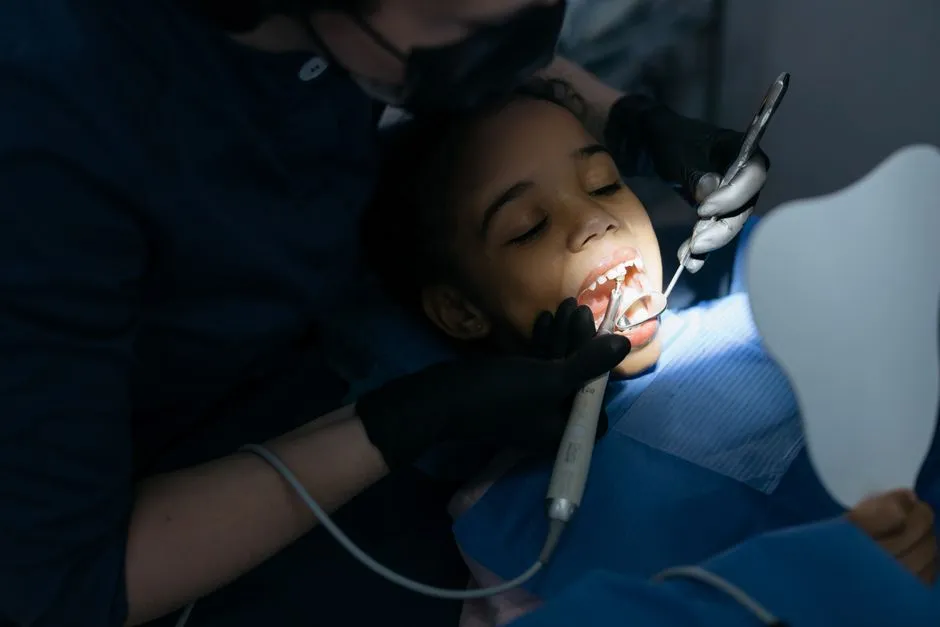
The American Academy of Pediatric Dentistry recommends a child's first dental visit by age 1 and routine cleanings every six months thereafter. At a community health center, the visit includes a head-and-neck soft-tissue exam, a tooth-by-tooth caries (cavity) screening, a polishing cleaning, and a topical fluoride varnish. The whole appointment takes about 30 minutes for a young child and is fully covered by Medicaid and CHIP.
Dental sealants
Sealants are a thin protective coating painted onto the chewing surfaces of permanent molars (usually around ages 6 and 12). They prevent the deep grooves on those teeth from trapping food and developing cavities, and they last 5–10 years. Federal EPSDT rules require state Medicaid programs to cover sealants on permanent molars at no cost.
Fluoride varnish
A high-concentration fluoride gel applied to the teeth at the end of a cleaning. It hardens the outer enamel and reduces cavity risk by 30–40%. Covered for all children on Medicaid and CHIP and recommended every 6 months for cavity-prone kids.
Restorative services
Fillings
When a cavity is detected, the decayed area is removed and the tooth is filled with composite (white) or amalgam (silver) material. For kids, composite is usually preferred for front teeth and small back-tooth cavities; amalgam may be chosen for larger back-tooth cavities because it's more durable. Covered with no out-of-pocket cost for Medicaid and CHIP enrollees in every state.
Stainless-steel crowns & pulpotomies
For a baby tooth with a large cavity that has reached the nerve, the dentist may recommend a pulpotomy (removing the infected nerve tissue) followed by a stainless-steel crown to protect what's left of the tooth until it falls out naturally. Both procedures are routinely covered by Medicaid pediatric dental.
Extractions
If a tooth cannot be saved — typically because of severe decay, infection, or trauma — the dentist will extract it. Most baby-tooth extractions are simple and quick under local anesthesia. Wisdom-tooth extraction in older teens may require referral to an oral surgeon.
Specialty & emergency care
Orthodontia
Medicaid in most states covers orthodontia (braces or clear aligners) when there is a documented medical necessity — for example, a cleft palate, severe overbite, or jaw misalignment causing chewing problems. Cosmetic-only orthodontia is generally not covered by Medicaid but may be available on a sliding-fee scale at some community health centers.
Emergency dental care
If your child has severe tooth pain, a knocked-out permanent tooth, a broken tooth from a fall, or a dental abscess (swelling), call the nearest community health center listed in this directory immediately. Most community health centers reserve daily appointment slots for dental emergencies, and Medicaid covers emergency pain treatment regardless of whether your child has had a routine visit recently.
Special-needs pediatric dental
Many community health centers have dental teams trained in caring for children with autism, sensory-processing differences, or developmental delays. Ask when booking whether the clinic offers extra-time appointments, sensory-friendly rooms, or sedation when needed.